

Description
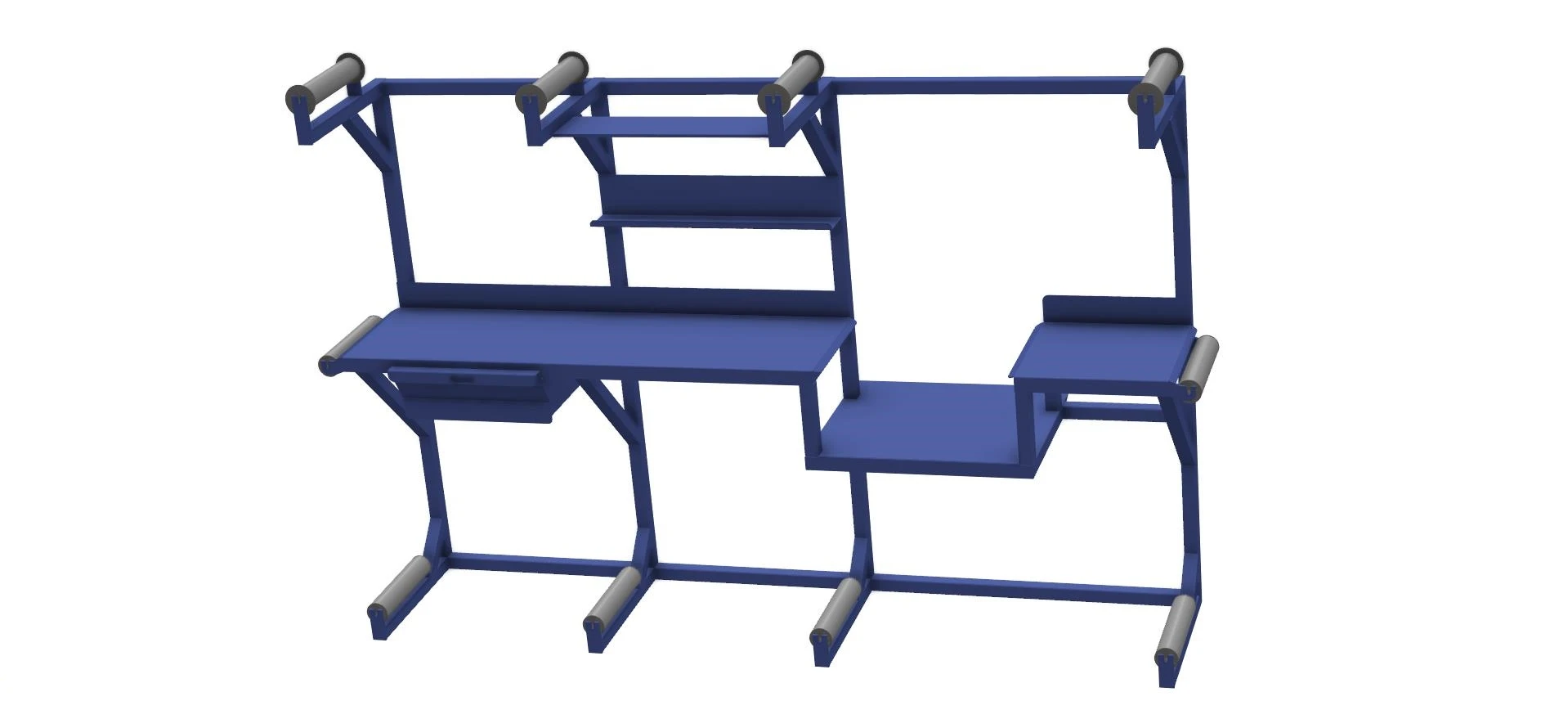
The bandsaw blade tensioning bench is a robust, precision-engineered structure designed for the tensioning, straightening and maintenance of bandsaw blades. Its purpose is to ensure correct blade tension, flatness and curvature control, essential factors for achieving optimal cutting performance, accuracy and longer blade life in industrial applications.
Function of the tensioning bench
The primary function of the tensioning bench is to provide a stable and accurate base for all blade preparation processes. Combined with the tensioning machine, it enables controlled, repeatable tension application along the blade, correcting distortions and ensuring that the blade behaves consistently during operation. This results in improved cutting performance, reduced wear and greater reliability on the production line.
Heavy-duty welded steel structure
The bench is built from arc-welded steel, giving it the rigidity and mechanical strength required for demanding industrial environments. This strong frame safely supports the arms that carry the running rollers for the bandsaw blade, ensuring stability throughout all tensioning and maintenance procedures while minimising unwanted vibration.
Integrated hardened and ground work surface
An integrated hardened and ground steel anvil is flush-mounted into the top surface of the bench. This work area provides a precise and durable platform for straightening, flattening, alignment and other essential maintenance tasks. Its hardness and finish guarantee long-term resistance to wear, repeated impact and continuous use.
Prepared for tensioning unit and symmetric roller
The bench includes a dedicated recessed area designed to house both the tensioning machine and the symmetric roller, ensuring consistent positioning and smooth integration. This layout allows operators to work efficiently with optimised ergonomics and faster setup between maintenance cycles.
Integrated electrical cabinet and control panel
The electrical cabinet is fully integrated into the structure of the bench, providing secure and convenient access to all control elements. The built-in control panel offers intuitive operation, simplifying workflow and maintaining all essential functions within immediate reach of the operator.
Typical applications and operational advantages
This tensioning bench is widely used in sawmills, industrial blade maintenance workshops and any production environment where bandsaw performance is critical. Key advantages include:
- Stable and robust base for blade tensioning, straightening and correction work.
- Full integration with tensioning machine and symmetric roller.
- Precision work surface in hardened and ground steel for high-accuracy maintenance.
- Compact and ergonomic control setup thanks to integrated electrical cabinet.
- Improved blade performance and longer service life due to correct tension and geometry.
Bartly solution developed by Irmach
Manufactured by Irmach and marketed under the Bartly brand, this bandsaw blade tensioning bench is a reliable, heavy-duty and essential piece of equipment for the preparation and maintenance of bandsaw blades in demanding industrial environments. Its combination of structural strength, precise working surfaces and integrated control makes it a key component in any professional blade maintenance setup.
Frequently Asked Questions about Bandsaw Blade Tensioning Benches
Which types of bandsaw blades is the tensioning bench suitable for?
The bench is suitable for industrial wood-cutting bandsaw blades of various widths, thicknesses and lengths. Dimensions and preparation surfaces can be adapted to meet each customer’s specific blade types and maintenance requirements.
Is the bench supplied ready for installing the tensioning machine?
Yes. The bench includes the recessed mounting area and all required fixation points for installing the tensioning unit and symmetric roller, ensuring fast setup and proper alignment according to Irmach’s technical standards.
Can the tensioning bench be customised?
Yes. The bench can be customised in dimensions, anvil layout, compatibility with different tensioning machines and electrical specifications, ensuring seamless integration into each customer’s maintenance workflow.