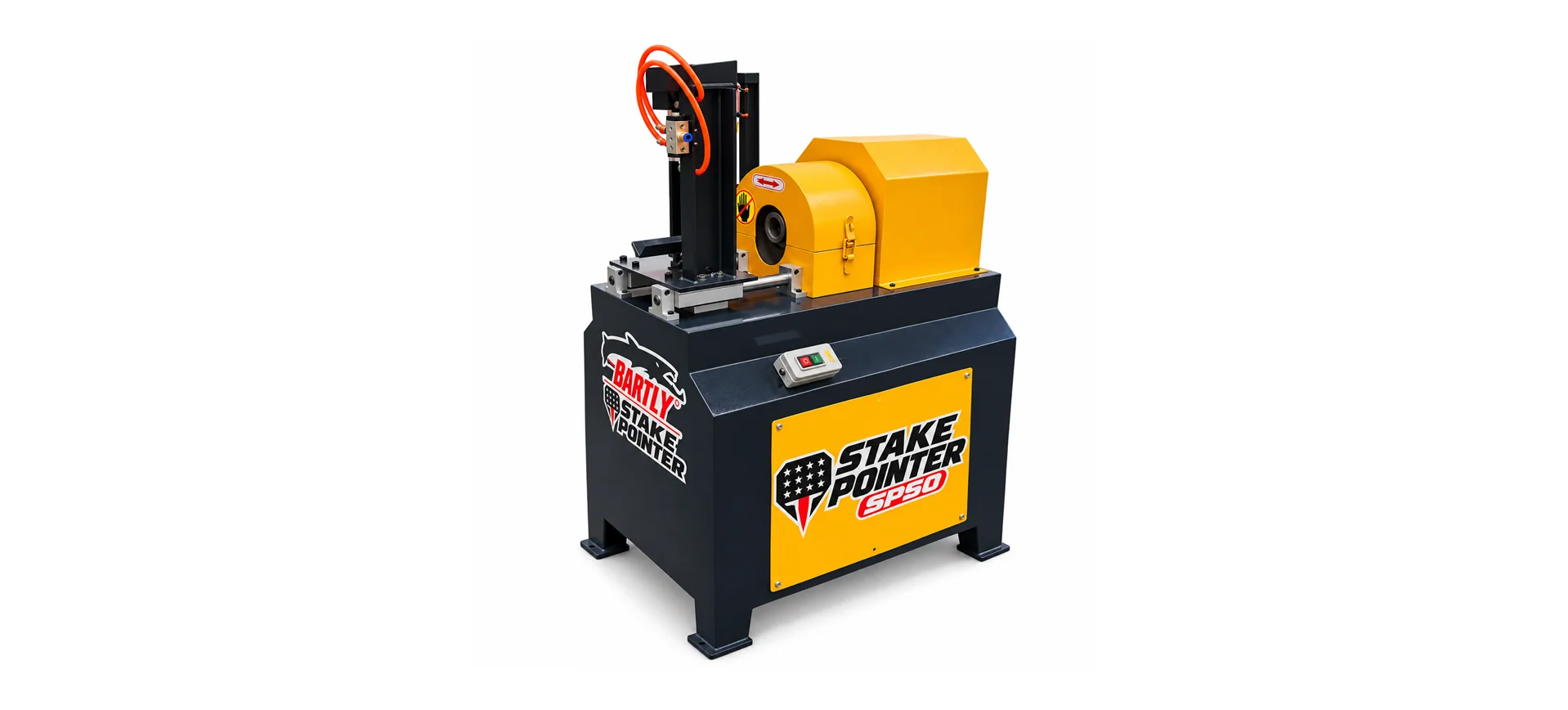
Description
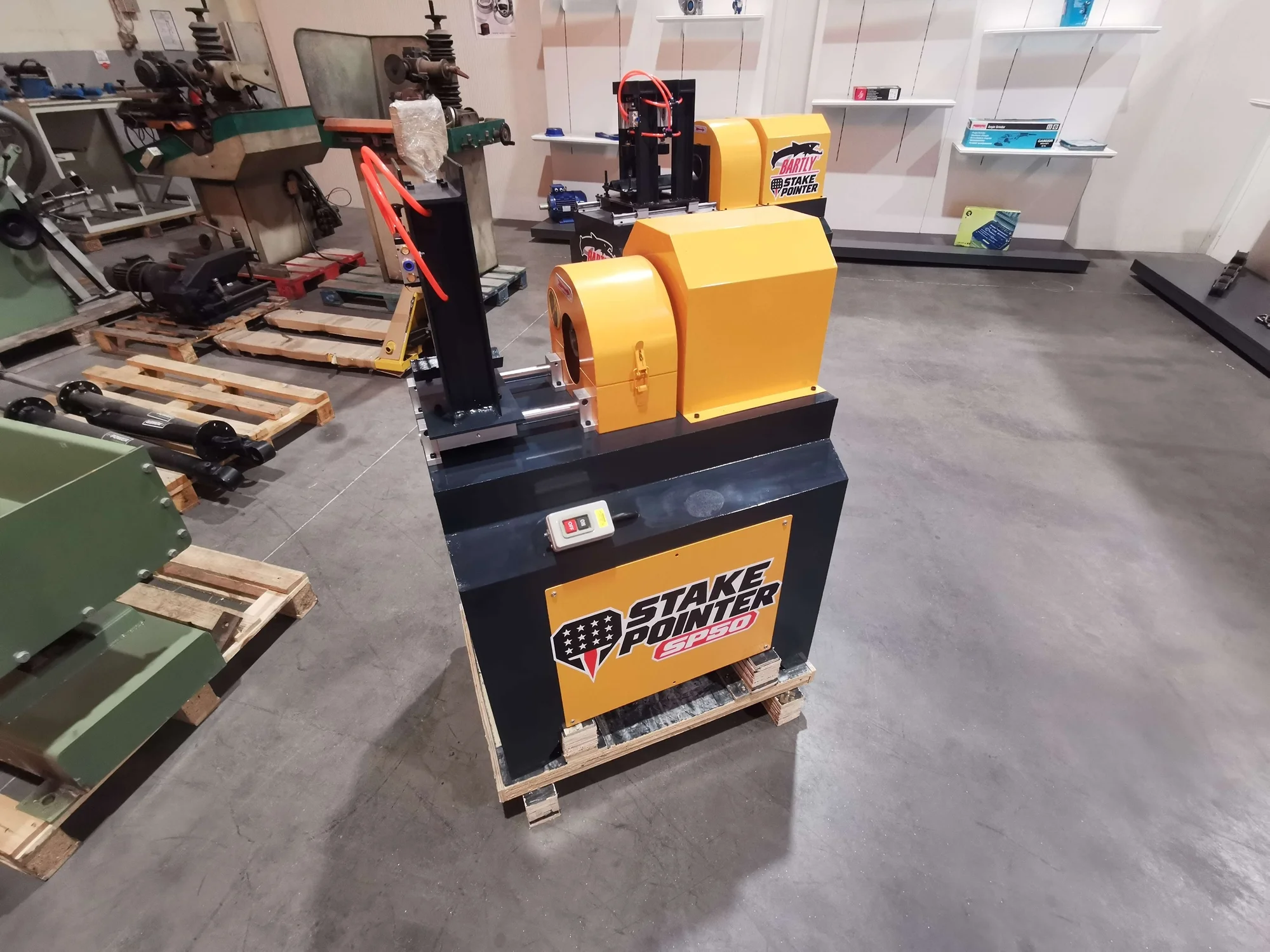
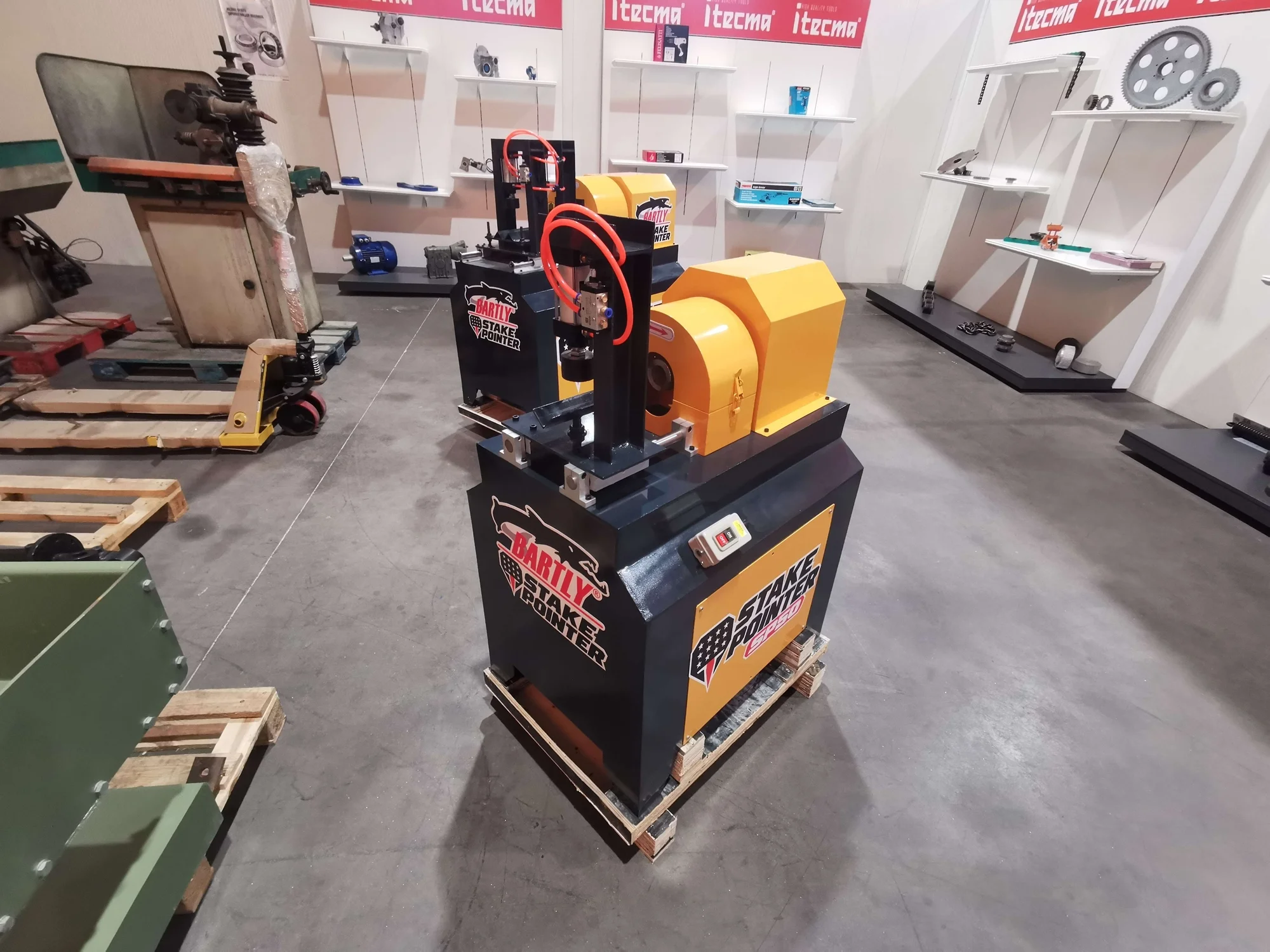
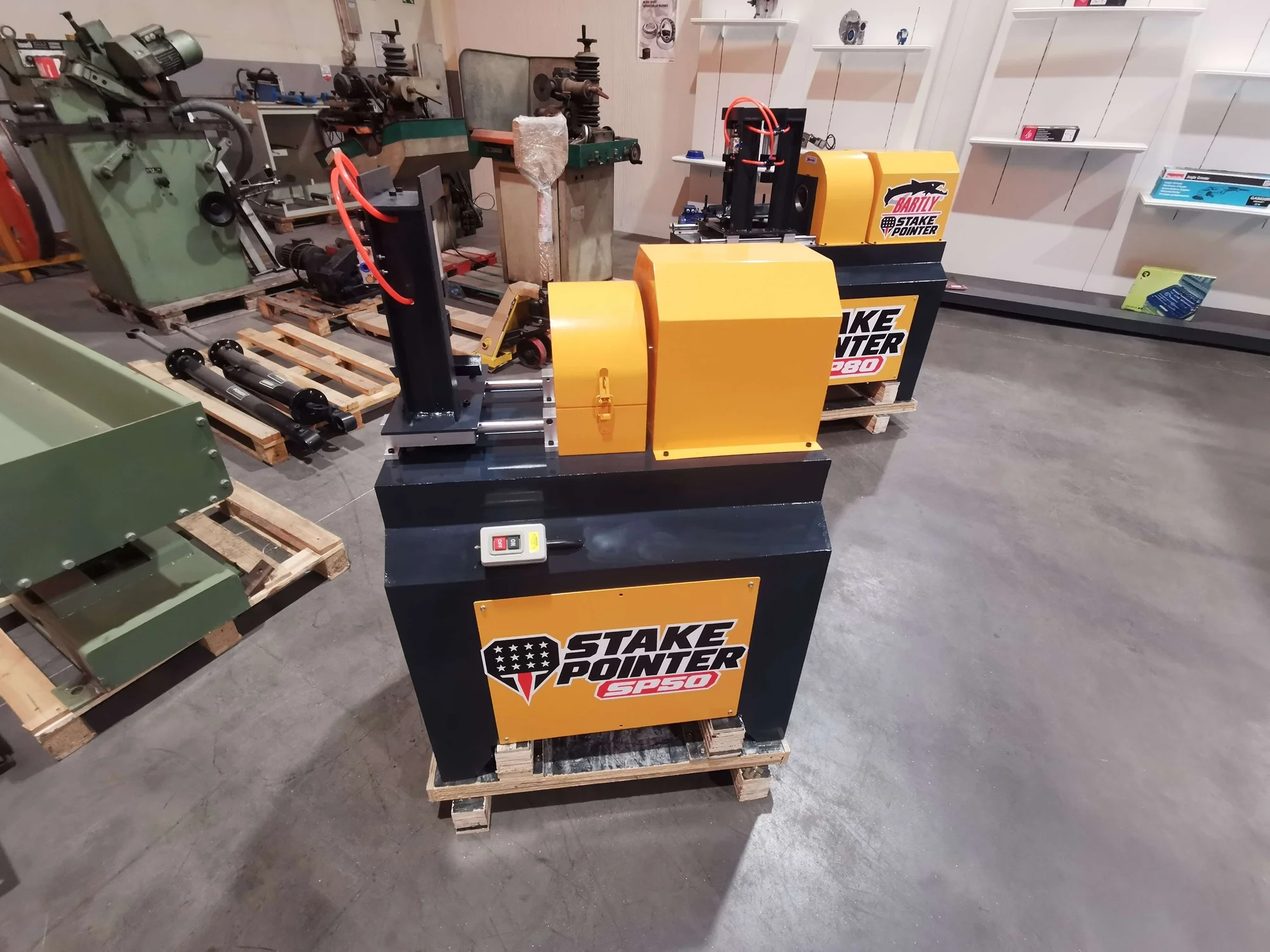
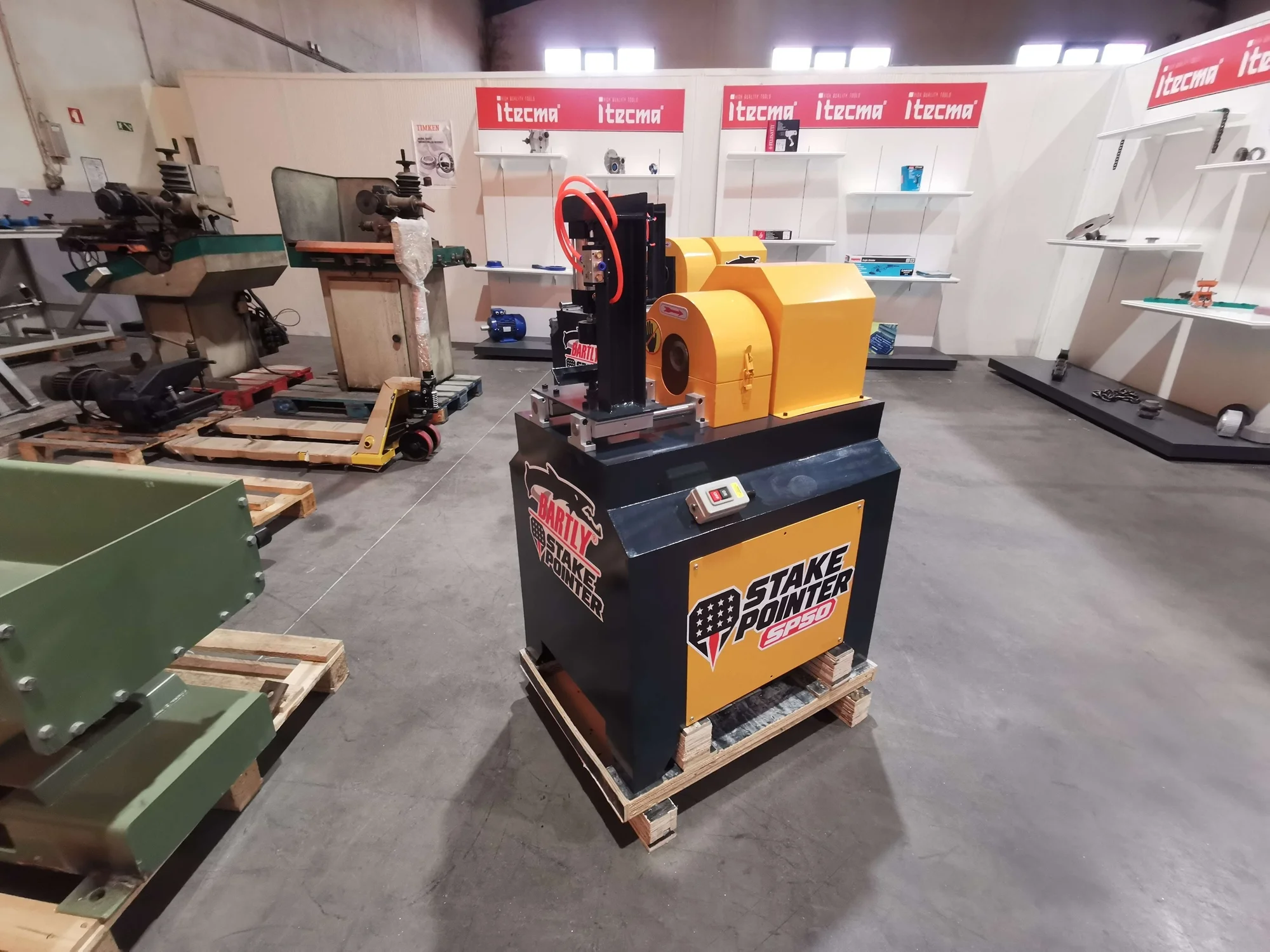
The BARTLY SP50 is a wooden stake pointing machine, also known as a stake sharpener or stake pointer, for diameters from 20 to 50 mm. Part of the BARTLY SP - Stake Pointer range, it allows taper lengths of up to 100 mm. Designed for sawmills and woodworking businesses, it combines straightforward operation, simplified maintenance and an affordable investment to start or complement stake production.
Main features
Stakes from Ø20 to Ø50 mm
Process wooden stakes from 20 to 50 mm in diameter. The SP50 allows you to add a pointing operation to stake preparation, according to the specified configuration.
Taper length up to 100 mm
Produce tapers up to 100 mm long. The geometry must be assessed together with the initial stake diameter and the required final tip diameter.
1.5 kW main motor
Equipped with a 1.5 kW main motor and a 380 V, 50 Hz three-phase power supply. The electrical conditions at the installation must be considered when preparing the supply of the machine.
Straightforward operation
The SP50 was designed for straightforward operation and simplified maintenance, allowing sawmills and woodworking facilities to integrate stake pointing into their activities.
Geometry specified for the product
Specify the stake diameter, taper length and tip diameter with Irmach. Other combinations of dimensions are assessed within the capacity of the machine.
Add value to your stakes
Start or complement wooden stake production with a pointing operation. A solution to diversify your range and prepare products to meet your customers’ requirements.
Specify the taper for your stakes
Compare the standard configuration with the dimensions and taper geometry of the product you intend to manufacture.
Standard configuration
Stake Ø35 mm
In the standard configuration, the SP50 processes a 35 mm diameter stake, producing a taper 85 mm long and leaving a final tip diameter of 27 mm.
Other dimensions
Configuration subject to assessment
Send the initial stake diameter, taper length and required final tip diameter. A photograph or dimensioned drawing helps assess the combination of dimensions and its compatibility with the SP50.
Technical specifications and configuration
Check the working capacity, motor specifications and standard configuration dimensions.
View BARTLY SP50 technical specifications
The standard configuration dimensions correspond to the taper geometry specified for that configuration. For other combinations of initial diameter, taper length and final diameter, confirm feasibility and the required configuration with Irmach before ordering.
Frequently asked questions
Which stakes can the BARTLY SP50 process?
The SP50 points wooden stakes from 20 to 50 mm in diameter. The configuration must be specified according to the taper length and required final tip diameter.
What is the maximum taper length?
The BARTLY SP50 allows taper lengths of up to 100 mm. In the standard configuration, the taper is 85 mm long.
What is the standard SP50 configuration?
The standard configuration corresponds to a 35 mm diameter stake, with an 85 mm taper length and a final tip diameter of 27 mm.
Can I specify other taper dimensions?
Other combinations of dimensions can be assessed within the machine’s capacity. Send Irmach the stake diameter, taper length and required final diameter, preferably accompanied by a dimensioned drawing.
Are stake pointing machines and stake sharpeners the same equipment?
In this application, the terms stake pointing machine, stake sharpener and stake pointer refer to shaping the end of a wooden stake to form a taper.
What power supply is required?
The SP50 requires a 380 V, 50 Hz three-phase power supply and has a 1.5 kW main motor.
Are there models for stakes above 50 mm?
Yes. The range includes the BARTLY SP80 for stakes up to 80 mm in diameter and the special-build automatic SP120 for diameters from 40 to 120 mm. The choice also depends on taper geometry and production requirements.
Where can I buy the BARTLY SP50?
You can request a quotation from Irmach for the BARTLY SP50. Specify the stake dimensions, required taper and planned workload so that the appropriate configuration can be assessed.